Saturday, June 29, 2013

Swedish Blog

Swedish blog

Stockholm

Stayed the first three nights (and later, the sixth night) with Markus, an ex-CSer of mine, and his Chinese girlfriend Effy in their nice big apartment, only 20 minutes from the city centre. Stockholm turned out to be a wonderful, bustling city - the nicest of all the Scandinavian capitals IMO, and I was so glad I gave myself 5 full days there. Here's a brief run-down of what I saw:

 *Gamla Stan - the old city - a mixture of medieval looking streets and buildings but full of souvenir shops all run by shady-looking Middle Eastern guys. 

Square in Gamla Stan
*The Royal Palace, where I was lucky enough to witness a military parade, complete with one of the best navy bands I have ever heard. Even while marching they never fluffed a note or played out of time or key.

The Navy Band
The guys were in a hurry to get home.

*The Vasamuseet - probably the city's greatest attraction - which 
houses the Vasa, an enormous wooden warship that sank in Stockholm Harbour 20 minutes into her maiden voyage in 1628. It was salvaged in 1961 but spent 15 years or so being restored (they're still working on the interior). It is totally unique and 98% of it apparently is authentic. The huge ship is festooned with beautiful statues and gilded carvings. I spent two hours at the museum, not only marvelling at the awe-inspiring vessel but learning about its manufacture, the reasons for its sinking (bad design ordered by a wanky king) and interesting facts about 17th century seamen (keep it clean please). 

Awesome!
*The brand-new ABBA museum, only 5 weeks old, where you learn about every aspect of Sweden's greatest musical export: the story of each of the band members, how they came together, their rise to fame (and how important Australia was in this), their costumes, videos, sound, world tours - you name it. It's very hands-on and high-tech too. You can remix their music, record yourself singing to their backing and participate in a projected song performance with your head on one of the band member's bodies. (Could have great trans-gender possibilities.) I loved every minute of it, as did the other smiling and nostalgia-filled baby-boomers filling the place. Cynically, however, I couldn't help thinking of one the groups' hits all the time I was there : "Money, Money, Money". (Entrance fees, audio visual guides and souvenirs were not cheap!) Still, good luck to them. They deserve it. "Thank You For the Music" ABBA!

Pretending to be Agnetha

*The Nordic Museum, dedicated to the cultural history and ethnography of Sweden from 1520 to the present. It had exhibits on every aspect of Swedish life though the ages, including furniture, clothing, food, clocks, even toys, all contained in a grand, palace-like building. Pity the whole thing was boring. (Not interesting enough for a pic.)

*Skansen - a vast open-air museum with historical buildings brought in from all parts of Sweden and Norway to show what life was like in ages past. It also had a zoo featuring animals found in the Scandinavian wild, including reindeer (of course), bears, moose, boars, lynxes, foxes and bison. All through the historical section people dressed in period costume were plying their trades, baking bread, weaving cloth, printing, forging metal and so on, all the time talking with the tourists. Very interesting.

A pretty country house in a pretty setting at Skansen.

There's a bear in there at Skansen.
Friday afternoon I went to my second hosts, Brita and Anders, who live outside of Stockholm on an island. (Brita is the sister of a host whom I shall be visiting on the 18th.) The couple also have a farm in the countryside where they hunt game and grow all their own fruit and vegetables. They welcomed me with a delicious meal of roasted wild boar and salad, followed by rhubarb pie - all their own products of course - which we ate in the front garden, being eaten ourselves by giant mosquitos, the size of small birds. (A bit of an exaggeration, but it seemed that way.)

Brita and Anders about to serve me a delicious wild boar repast.
The next day I visited Drottningholm Palace, the main residence of the royal family (in summer at least) which is not far away from Brita and Anders. It is a major tourist attraction with vast, beautiful grounds and delightfully quaint buildings in the gardens, like the Turkish guard house and the Chinese Pavillion. The palace itself was nice but the real treasure is the little theatre, which is an authentic classical-period opera house that has not changed in 250 years. Still used for performances today, the theatre's stage machinery, trap doors, curtains and even storm and wind sound effects machines still work as they did in the 18th century. The entertaining guided tour through the theatre was magic - like a trip back in time.

Drottningholm Palace
The Turkish guard house.

The magical little opera theatre at Drottningholm on the right.

Gotland and Fårö

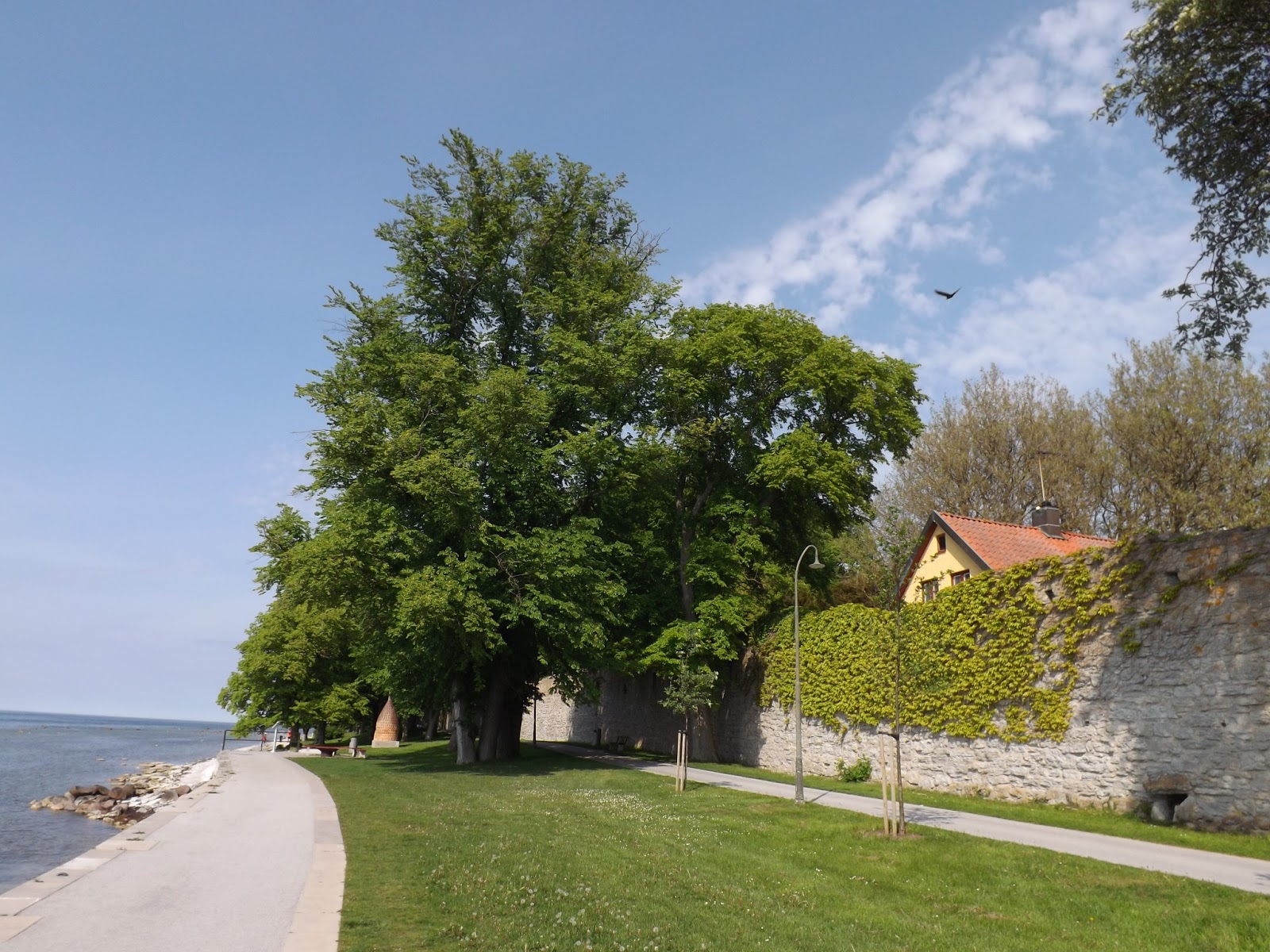
On Monday I took a 2 1/2 hour ferry ride over to Visby, on the island of Gotland, south of Stockholm. It's a medieval walled city dating back to the 12th century, so culturally precious that it's on the UNESCO World Heritage List. I was enchanted by the cobblestone lanes, the stone "ring wall" (all 3.6 ks of it), with its many fortresses that had been built for protection against the Danish, Germans and various pirates. (The place has had a stormy past.) There are also dozens of ruins of churches and other interesting buildings scattered around the island, which I was not able to see unfortunately, being carless. 

Beautiful Visby, Gotland
Part of the ancient wall that surrounds Visby.
On the third day of my Gotland sojourn I organised with a taxi company, at enormous expense, a private tour of the nearby northern island of Fårö. The island is pretty barren and only 600 people live there, but it is famous for its Langhammar nature reserve in the north-west that features colourful rocky beaches and weird-looking Ice Age stone monoliths known as rauks. Langhammar was the setting for Ingmar Bergman's film Through a Glass Darkly, so it's of particular interest to movie buffs like yours truly. The tour was fantastic and the rauks were out-of-this-world, as you can see by the pictures. I was intrigued by some of the place names on the island, like Fårskinn (pronounced foreskin). I didn't like the idea of living there - you'd feel cut off. (Ouch!)

Rauks on Fårö. Is that weird or what?

More weird rock formations on Fårö. This one's called The Dog, for obvious reasons.


Darlanar
It took me a ferry ride, two buses and three trains to get there but I finally made it to Rättvik on Lake Siljan in the Darlanar (The Dales) region of central Sweden. I wasn't planning to go there but several people told me I should. And since I was let down badly by a CS host who informed me at the last minute he couldn't take me in Gränna (near a lake in the south), I took the opportunity to alter my plans. The day I arrived was the last day of school and I witnessed first-hand the Swedish version of Schoolies. The Year 12 students dress up very elegantly: the girls in short white dresses, the boys in long pants and dark jackets with everyone wearing the traditional white, black-rimmed student cap. They march or parade around town on the back of trucks drinking champagne, shouting and blowing whistles and hooters. (And there's nothing I like better than pretty Swedish schoolgirls with large hooters.) I saw this from every train station I pulled into. I couldn't take a picture as my camera was locked in my bag, but here's a couple from the Internet:

Swedish Schoolies
Obviously not sad that school is over!
Due to the lateness of my decision to come here I wasn't able to find a cheap hotel at Rättvik, so I had to make do with a hostel. It wasn't bad. The owner was very nice and the place was large, well-set up, clean and almost empty. But you still had to walk down the hall for a pee or a shower, or both together (oops - sprung!). There was lots to see at Rättvik but not having a car restricted me greatly. I wanted to get out into the countryside to see the delights of this region that is famous for its "folksy" traditions - its art-bedecked farm houses, folk lore, arts and crafts (including the famous red dala horse, the symbol of Sweden), music and so on.  Here's a picture of the famous carved wooden horse. (Actually it does nothing for me, but who cares? Tourists buy the expensive little things by the bucket loads.)
A Dalarna horse that everyone who visits Sweden has to buy.
The next day (Saturday) I took a train to Mora, near which lies the little village of Nusnäs where the Dala horses are made.  To my great disappointment I discovered that buses don't run there on weekends (how stupid is that!) and the workshops close at 1 pm on a Saturday. I'd arrived too late, even if I'd tried to negotiate a price with a taxi driver, which was my plan. It wasn't a total loss, however. At Mora is a museum on the life and works of Anders Zorn, Sweden's most famous 19th-20th century artist. (Actually their most famous artist, period.) I'm ashamed to say I'd never heard of him, but the museum was a revelation. The man was a genius, and I absolutely loved his paintings. Definitely a joyful discovery for me. Here's a sample of his impressionist-influenced works. It's typical in that glorifies the female nude in a natural setting (he hated studio portraits) and uses light and reflections in a striking way:

A lovely Dalarna lass bathing. Sadly I didn't see any like this when I was there.
Sunday was grey and drizzly, which put paid to my walking-round-the-lake plans. Instead I took a bus to Falun, the "Capital of the Dalarna" region one hour away, to see one of Sweden's most visited museums - you guessed it, the Dalarna Museum. There I learnt more than I needed to know about the region's unique history and folk arts (textiles, wall paintings, copper and leather work etc.). The only trouble was that it was all in Swedish, with no English translations - the first such museum I'd come across. The dictionary in my iPod got quite a workout, I can tell you. "Here is a picture of weaver Anders Oluffsen, proudly showing off his enormous...[type, type, type]...hand loom." In the surprisingly cheap gift shop I finally succumbed and bought myself a little Dalahäst (horse), but blue, not the traditional red - a colour I hate. It cost about $25, a lot cheaper than I'd seen in other shops. My little Dalarna Darling shall stand beside my computer as a permanent reminder of my visit to Sweden.

Falun is also famous for its copper mine (now closed) that provided employment to Swedes for centuries, so I walked out to the huge hole in the ground just outside the city to take a gander. Very impressive. I decided not to go through the museum though, having worn out my thumbs and my iPod's battery at the last one. Besides, I always find mining museums the pits. (His humour is reaching new depths.)

Remnants of the copper mine.
Returning home that Sunday night my tongue was hanging out for a drink so I went to the local Systembolgaet at 4pm to buy something and it was closed, can you believe it? I haven't explained what these Systembolgaets are yet. In Scandinavia you can't just go to a bottle shop, hotel or supermarket to buy grog; you have to go to a state-owned shop that has a total monopoly on the sale of alcohol. The good points: the prices are reasonable, the quality and range is excellent (they have many wines from Australia and NZ) and the sales advice is great. The bad points: they are scarce, they are always full and they have restricted opening times - closing hour is often 6pm and they are closed on Sundays. I think the idea is to limit binge drinking, but the locals tell me that it's not working. Well, it certainly worked on me that Sunday night! : > (

Fjällbacka

After 3 nights in the Darlarna and one overnight stop in a B&B in Gothenburg I travelled north through gorgeous green countryside speckled white with grazing sheep to the little western coastal fishing village of Fjällbacka for another three night stay. Why? you may ask. Well Fjällbacka is one of Sweden's little treasures, oozing ambience like you wouldn't believe. It's not only famous for its beauty and charm but also for its association with the actress Ingrid Bergman who with her husband set up their summer house on a nearby island (of which there are hundreds). It reminded me in look and feel of the village in 'Murder She Wrote' - a comparison which is quite fitting because one of Sweden's top female crime writers, Camilla Läckberg, comes from Fjällbacka and sets many of her murders there (I can't say I'd ever heard of her so I bought her first book on line from the Kindle store and started reading it on my iPad.)

Charming Fjällbacka. The picture doesn't do it justice.
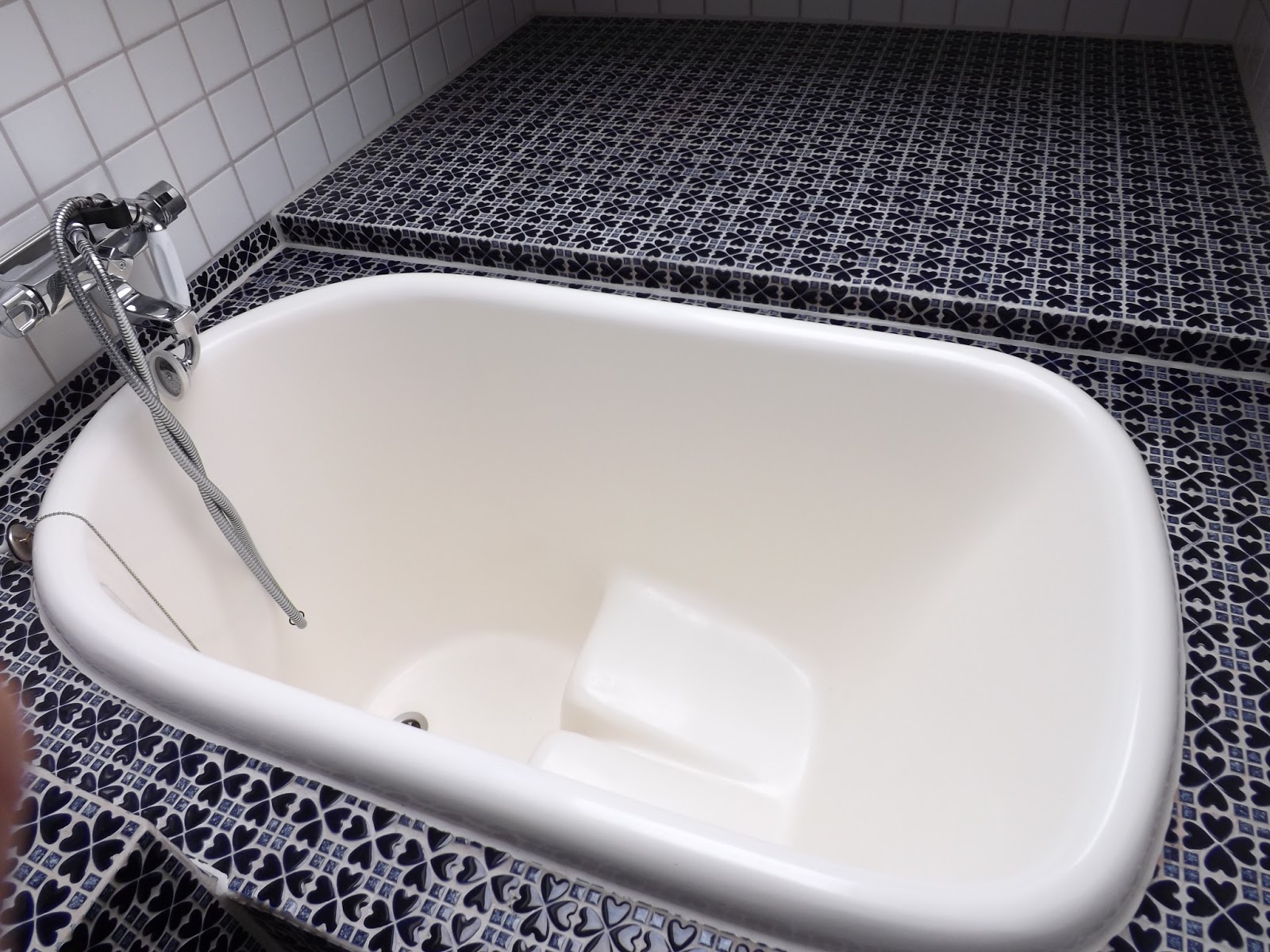
The hotel I stayed in was interesting. Very olde worlde, it was refurbished to the theme of an old fictitious and randy sea captain with a girl in every port and each room bore the name of one of these maidens. I was lodged in Ilse, so to speak. In keeping with the captain's bawdy nature, the bathroom was adorned with explicit pictures from the Khama Sutra. (A fitting place to keep dirty pictures.) The bath tub was a piece of work. A kind of hip bath, I didn't know whether to sit or stand in it. And getting in took me forever. I was scared I'd slip and injure my privates. When I finally lowered myself to sit at the bottom of it I was laughing hysterically, thinking I wouldn't be able to do this in the nursing home (next year). Suddenly the laughing stopped. F**k! I'd forgotten the shampoo. I had to heave myself up out of that deep well with nothing to hold on to, step out with my wet feet on the slippery concrete floor, get the shampoo and get back in again I decided to see the girl at the desk and arrange a portable crane to be brought in for the next two nights. The tub is a disaster waiting to happen. It's great for doing washing though. I did a whole bag of my greys and browns (they used to be my whites) in it. I'm sure the maid had a heart attack when she saw the three lines of washing strung up in the bathroom the next day. The place looked like a Chinese laundry!

The killer bathtub
My activities in Fjällbacka were dictated by the weather. As rain was predicted on Thursday I decided to do a boat ride on Wednesday to an island called Storö-Ramnö, which is part of a nature reserve. The ride to the island took 30 minutes, after which they left you to wander around with a useless map, clambering up and down the rocks trying not to break your neck, all the while admiring the exotic plants, birds, seals and so on, all of which unfortunately were hiding themselves from me that day. I managed to pass a couple of stressful hours risking life and limb after which I sat down to regain my composure (and balance), boozing in the small hotel till the boat returned.

What I clamboured over for two hours. It's a wonder I didn't break my neck!
While I was sitting imbibing I met an Australian couple who had spent the night on the island (why, I have no idea - there's nothing there) and we agreed to meet for dinner that night back on the mainland. This was to be a very costly mistake. They had a kind of package deal which included a fancy three-course meal. I stupidly said "I'll have what they're having" and by the time a beer was added and a glass of mediocre Chilean pinot noir (at $18 a glass!) my bill came to the equivalent of $98. This has to be a personal record for a restaurant meal. Much more of this and I'd be prematurely returning home to Australia penniless!

As predicted, Thursday was rainy and miserable, so I just veged out, sleeping and reading my new Läckberg novel, enjoying the fact that I recognised many of the place names in it. In the afternoon it fined up enough to allow me to climb the stairs to the top of the rocky hill overlooking the town and to wander the narrow streets, looking at all the cute houses. There were almost no tourists, and like everywhere I'd been the past week, both in Gotland and the Dalarna, the place was dead. Tourist season starts in earnest on June 15th apparently. It made me wonder how these people can survive during the 9-month off-season. (By charging $98 for an evening meal, obviously.)

Gothenburg

My four days in Gothenburg, Sweden's second biggest city, were fabulous. My CS host Mats (61) was very kind and accommodating. He not only showed my all over his lovely city but took me to the beautiful island of Marstrand on one day and on another to the northern archipelageo where we took a ferry and island-hopped in glorious summer weather. Only one day did it rain and that afternoon we spent at a couch surfing meeting so it didn't really matter. Mats is a passionate music lover and we spent many enjoyable hours watching recordings of Swedish singers and musicians in grand settings like royal palaces and the Oslo Town Hall for the Nobel peace prize ceremony. Being a true Swede, Mats is a keen ABBA fan and his lovely house was always filled with their songs. (Bloody hard to get to sleep at night though, with "Mamma Mia" refusing to leave your brain. Curse their catchy melodies!) Here are some pics of my Gothenburg experience.

Marstrand from the mainland. Beautiful!

Mats at Marstrand

Halmstad

My next port of call, the coastal city of Halmstad, was basically to catch up with Barbro, an ex-Couch Surfer of mine who had stayed with me five years ago. Cunningly, I planned to be with her from the 18th to the 23rd so that I could celebrate with someone I knew two important events: my 64th birthday on the 19th and Midsommer Eve on the 21st. (Midsommer, the next day, is basically a sleep day to get over the afternoon before.) The first couple of days were spent relaxing, drinking, talking about old times, drinking, playing scrabble, drinking and eating. (Oh, did I mention drinking?) On the 20th Barbro took me to Felsberg where she works (a beatiful historic little town) and I helped her daughter Eva and son-in-law Fredrik move furniture out of the flat she had there where she usually slept during the week. She had decided to give the flat up and commute each day to work from Halmstad, 30 minutes away. Eva and Fredrik and their two delightful young children stayed with us till Sunday. The adults both spoke fluent English (who doesn't here?) and I shared an enjoyable barbecue (where I tasted Moose for the first time - yum!) and many interesting stories with them.

The obscenely cute grandchildren, Julie and Carl

On Friday afternoon, Barbro, her friend Elizabeth and I went out into the countryside to celebrate Midsommer Eve with friends. This day is Sweden's second biggest celebration after Christmas and has many traditions associated with it. Usually the local community gathers and dances and sings around a maypole, some wearing traditional folk costumes or crowns made of wildflowers on their heads. It was very enjoyable and I was surprised to see that people of all ages (including teenagers, whom I thought would have thought it uncool) were involved. The evening meal at Barbro's also contained many traditional aspects, as Wikipedia explains: "The year's first potatoes, soused herring and pickled herring, chives, sour cream, beer, snaps and the first strawberries of the season are on the menu. Drinking songs (snapsvisor) are also important at this feast, and many drink heavily." (Of course I forced myself to submit to the latter celebratory requirement!)

Dancing round the junepole, sorry, maypole

Barbro and Elizabeth waiting to start the traditional Midsommer Eve meal. See if you can see the various items mentioned above.
On Saturday, a public holiday when everybody tries to get over the revelry of the day before, I went to Helsingborg, an hour south of Halmstad. The weather was not too good for walking around and seeing the sights, so I decided to take the ferry to Elsinor (or Helsingör in Swedish) on the northeast coast of Zealand, Denmark, which is only 20 minutes away. This little Medieval city is known internationally for its castle Kronborg, where Shakespeare's play Hamlet is set. I figured if it was going to rain, this would be the sensible place to go. However, by the time I got to Elsinor it had cleared up and I spent three pleasant hours walking the cobbled streets and checking out the castle. I then returned to Helsingborg and checked out its sights (both of them) then had a nice Italian meal before getting the train home to Halmstad. A very nice day.

A tug boat in the harbour at Elsingor. Note the Kronborg palace in the background.

Swedish Lapland

After Malmö I flew up to the mining town of Kiruna, in Swedish Lapland for another taste of the Midnight Sun. Why, you may wonder, after I'd already seen it in Finland. I wondered myself. It was probably a mistake but a good one. I'd had enough of busy towns and a four-day stint in the wilderness was just what I needed. Kiruna is interesting. Iron ore mining began there in the 1900s and because they are drilling diagonally under it, the town is subsiding and has to be moved 2 kilometres eastwards lock, stock and barrel within 15 years - which will cost billions of course, but this is just a blip in the mining company's annual profits. Kiruna is also a popular winter destination for skiing, dogsledding, snow mobile riding, ice climbing etc. During the winter you can also stay at an ice hotel and see the Northern Lights. So the place really rocks at Christmas time; it was dozing when I was there.

Here's a quick run-down on what I did at Kiruna:
Day 1 - the tour company took us into the woods to a cabin where the young English-born guide James cooked us a delicious three-course meal - reindeer on rye, salmon, and cloudberries with vanilla sorbet - which I enjoyed more than many of the meals I'd paid a fortune for in fancy restaurants in Sweden. We ate the meal as the giant mosquitoes ate us. (They are enormous, and ferocious in Lapland. Luckily I'd brought insect repellant which kept them at bay). After our meal we drove up a mountain for a spectacular view of the town, the Torne River, the surrounding mountains and of course the midnight sun, which unfortunately only partly showed itself. (Still, much more than at North Cape in Norway where it was totally hidden by clouds.)

Day 2 - The morning tour was through the world's biggest underground mine, half a kilometre down. Through exhibits of enormous equipment, films, slide shows and multimedia presentations we leant about every aspect of the iron mining process. Absolutely oresome. The afternoon activities began with a trip to a Sami (the indigenous Lapp people) settlement where we met an elder and reindeer herder who talked about the Sami ways. We were supposed then to feed the reindeer but they'd been gorging themselves all day on tourist tucker that they turned their snouts up at ours. After this we went on a testicle-freezing boat ride along the river to a small wooded island where we had another delicious meal (cooked by the German-born guide Michael) around a camp fire in a small cabin. Guess what the main meal was...yep, Rudolph stew. 

Day 3 - a bit of a disaster really, because of the inclement weather. We drove north to the Abisko National Park situated in a high mountainous area not far from the border with Norway. Young James tried his best to make the trip interesting ("Behind the clouds you would normally see...") but it was to no avail. We were supposed to do a hike along a raging stream for an hour but the rain restricted us to about 20 minutes. Still, the fish-soup meal by the fire in a cabin was nice.

Day 4 - did a morning guided tour of the famous Icehotel in a little village east of Kiruna. The hotel itself doesn't get built till December but they have a couple of rooms plus the bar in a refrigerated building for use all year round. It was fascinating to see how they made the ice blocks (beautifully clear, not white) from the Tourne River and also the ice glasses used in the bar. Apparently they have 5 different types of rooms in ascending degrees of spoofiness. The most expensive rooms (with hand-carved ice furniture and works of art on the walls) can cost $1000 a night. I'm not sure I'd be able to sleep there - the reindeer fur bedecked beds felt bloody cold to me. (You sleep in a sleeping bag on top apparently). You wouldn't want to spend too much time in the Icebar before turning in. Going to the loo in the -5 degree cold at 3am would be no fun. (I'd probably just wet the bed - at least you'd be warm for a while.)

So that, my friends, basically ends my Swedish holiday and my Scandinavian adventure. Tomorrow I fly back to Stockholm then straight on to Paris to meet my sister and cousin on Monday morning for the next part of my 6-month adventure. So far no mishaps or disasters, only nice experiences. Long may they last!

Tuesday, May 28, 2013

Finland/Norway Blog

Days 1-2

Hi folks! I'm writing this at 3.30 am with the sun shining outside my hotel window. Weird, huh? (The fact that I'm writing this at 3.30am is also weird.) It's day 3 of the Northern Highlights tour and we're in a Finnish town called Kuopio en route to the Arctic Circle. The tour began yesterday with a drive around Helsinki then a couple of hours of independent exploring of the harbour precincts. It's a nice town with some lovey old art nouveau buildings and interesting statues, but I'd been there before so there were no surprises. The afternoon was basically a four-hour drive to Kupio, passing through some nice, but unspectacular scenery consisting of mainly pine and beech tree forests and a million lakes. Weather-wise, the day was gorgeous: bright blue cloudless skies with cool but pleasant temperatures.
The great Lutheran Cathedral, Helsinki
Our group is 39-strong, one third of which are Australians. There are a half a dozen Kiwis, a few Poms, Irish and Scots, a Canadian woman and an American girl, then the rest are Asians (from India, Thailand, Malaysia and Singapore). All in all a reserved bunch of mainly oldies (except myself of course), though a couple of giggly NZ women are good value. The tour leader is a bubbly young Hungarian girl called Judit who seems organised and efficient. She has two trainees with her: a Polish girl and a Swedish girl. The bus, sorry coach (it has a toilet), is brand new and fairly spoofy, so all things considered it should be a good tour. Apropos the toilet, we're not allowed to use it while in motion, so to speak, because of European traffic laws. If someone urgently needs to use it, the coach has to pull over and stop, which happened to a hugely embarrassed English lady yesterday who rushed up the aisle to the accompaniment of catcalls and smart comments. ("You shouldn't have had that second cup of tea, luv!") The laws also stipulate the compulsory wearing of seat belts, which all the Aussies ignored of course. Apparently when we get into reindeer country the driver often has to break suddenly because of straying Rudolphs. The consequences could cost us deerly.
Our group. I'm right in the middle.

Day 3

The third day of our Northern Highlights tour (which I've renamed the Snore-thern Lowlights Tour) was spent mainly in the coach as we drove north through boring scenery for 6 hours to Rovaniemi, capital of Finnish Lapland. As I remarked to one of the tour members, it's pretty sad when the highlights of the day are the toilet stops. Why we couldn't have flown there is beyond me. Anyway, the day ended with a potentially nice optional extra: a traditional meal put on by the Sami people, one of the ten indigenous tribes of Lapland, in a large tent-like structure with a fire in the middle and tables laid out around it. We were promised reindeer so I expected a large slab of the beast roasted over an open fire. What we got was minced meat sprinkled sparsely over a large bed of mashed potato. Still, I have to admit it was pretty delicious, just not as primitive and macho as I was expecting. Dessert was a traditional Lapp pie made of local lingonberries. Also delicious. All in all, however, the evening was pretty boring. Only half of the group attended - mainly the Asians, who hardly ever open their mouths, and the rest seemed to be the dullest of the already dull group. (Where were the riotous NZ women when you needed them?) I was praying for some Lapp dancing (!) to spice the evening up, but that never eventuated. I did discover, however, that the Canadian lady is from Quebec and is French speaking so I might practice my Frog with her some time. By the way, speaking of languages, I really don't feel comfortable in Finland. As you know, I usually travel to places where I can communicate with the locals, but here it's like being on another planet. In Denmark I could always read signs and menus as Danish and Swedish are so close but Finnish is not one of the Germanic languages (it's closer to Hungarian and Estonian) and I can't understand a single word! I can't wait for the Finnish leg to finnish (pun intended) and to get into Norway where I should be able to speak Swedish.
Our tour guide Judit, giving us instructions on how to eat our reindeer meal

Day 4

A much appreciated "veggie day", with just one organised activity: visiting the Santa Claus Village, a kind of theme park which was as crass as its sounds. I declined to line up and have my picture taken with the big fella (at 25 Euros a shot). That was a Lapp experience I could live without. Instead I just wandered around the souvenir shops and soaked in the atmosphere, enjoying the superb sunny weather. The only mildly interesting thing about the place was that the Arctic Circle ran through it. 
Straddling the Arctic Circle with Yvonne and Meg from NZ
In the afternoon I visited the impressive Arktikum (arctic museum), where, amongst other things, I lay on my back and watched beautiful footage of the aurora borealis, which was definitely NOT a bore. (About the only thing in this trip that hasn't been.)

Day 5

Wonder of wonders: a couple of interesting things happened today. We saw our first wild reindeer, we saw lots of snow and we visited a gold museum. We're still heading north, but strangely the weather is becoming milder! Our overnight stay is in Saariselka, on the edge of the "virgin wilderness" (I'm looking forward to seeing some) and part of Finland's major national park, a stone's throw away from the Russian border. In winter the village is a bustling ski resort; at the moment it's dead. But that's fine by us as we need our sleep. Tomorrow is going to be a long day - 25 hours in fact. Read on to find out why.
Our first wild reindeer. Looks like an albino to me.

Outside the Gold Museum. That's fools gold in the foreground, unfortunately.
 
The lookout at Saariselka

Day 6

Well, I can't complain today. The scenery was great: hilly pine forests, half-frozen lakes, reindeer by the sleighful, vast snow fields, spectacular fjords, etc, etc. In the morning, after visiting a Sami (indigenous) community, we crossed into Norway, gaining an hour on the way (thus the 25-hour day). Though the landscape became progressively spectacular the weather became progressively worse, until by late afternoon it was lightly raining. Our first spell of bad weather. However, the cold, rainy conditions kind of went with the wild terrain. Our night stop was the tourist haven (in summer, not now thank goodness) of Honningsvag on a small island, access to which is through three long tunnels. The beautiful little harbour town is the end station of the fjord cruise to Bergen which takes 2 weeks. (We'll be doing just a short leg tomorrow.)
The wild shoreline up to North Cape
That night we experienced what was billed as "one of the highlights of the tour" - a drive to North Cape, Europe's last northern outpost, on a sheer cliff rising 305 metres from the Atlantic Ocean. The idea was to view the midnight sun rolling just above the horizon. It was freezing cold (4 degrees) but I was dressed for the occasion: long johns, two coats, gloves, balaclava, etc. The long johns, which I'd found stashed away in a forgotten bag at the back of my wardrobe, had obviously been purchased decades ago when I was just a slip of a lad. Getting them on was a quite a stretch (literally) and left me speaking in a high-pitched voice. But it was worth it. The trip up the mountain was awesome, even though in the end the sun was hidden by the heavy clouds. At least it didn't rain.
Up at freezing cold North Cape

Day 7

By the time we got back from North Cape to our Honningsvag hotel it was 1am and we had to be up this morning at 5.15am to catch the 6 o'clock ferry for a 5-hour fjord cruise to Hammerfest. So as you can imagine we were all very bleary-eyed that morning It was a great cruise though, with magnificent snowy mountain scenery viewed from a luxury cruise-ship type vessel. 

Boarding the ferry to Hammerfest

After lunch we headed inland and southward through wide, flat snow fields to Alta, situated at the mouth of the world's richest salmon river. That night our hotel put on a magnificent buffet (the best of the tour), starting with an array of cold fish - at least six different kinds, including salmon of course.  Naturally I had to sample the lot. Alcohol was off the menu however, as Norwegian taxes makes the prices prohibitive. We were all well prepared though, having stocked up in Finland. I'd bought a bottle of Akvavit and a bottle of Jägermeister to have before each dinner. (I mean a bit of each, not a whole bottle!) I figured they should last me just over a week. So every night in Norway I would stagger down to dinner in a highly inebriated state, then sober up during the meal.  Consequently it didn't really matter what I ate in Norway as I was always too drunk to care.

Day 8

A long day of driving (over 500ks) which was made palatable by the breathtaking scenery - fjords and snow-covered alps surrounded us the whole time. I've never seen anything like it. Norway is truly a scenic wonderland. That night at our hotel in Narvik I spoiled myself with a traditional fish meal that cost over $50! It was delicious but of course not worth the money. Norway may be beautiful but the prices are horrendous! Everything is almost twice as much as in Australia. For example, a glass of beer costs over $10; I was never game to find out how much a glass of wine would be.

A sample of the beautiful scenery, shot through the bus window

Speaking of money, I just want to make an interesting observation. Norway is a cashless society - the first I've come across. Everyone uses a credit card for everything, no matter how trifling: a cup of coffee, a loaf of bread, whatever. For the first time in my travelling life I haven't bothered to get any of the local currency. (I just have to be careful not to run into a toilet that requires a coin - and there are some, apparently. It could be nasty.)

Day 9

This morning we visited the Narvik war museum where we learnt heaps about the naval battles that occurred here between the British and the Germans and what life was like during the Nazi occupation. Interestingly, there are still dozens of warships at the bottom of the waters of the fjord. In the afternoon some of us did an optional tour of the city that ended with a gondola ride up a mountain for a spectacular view of the city and the surrounding alps.

Day 10

Another long day travelling (440ks), but the weather was glorious and the scenery constantly spectacular. In the late afternoon we crossed the arctic circle again - back supposedly into the world of sunrises and sunsets. Huh, someone forgot to tell the hotel where we stayed that night (at Mo I Rana). The sun was so bright and so intrusive my room was like a furnace and I was forced to sleep practically naked and wearing eye shades like they give you in planes. How's that for a mental image?!

The Arctic Circle again

Day 11

An even longer day's coach ride than the one before, but, with the scenery changing to lush pine forests à la the Black Forest,  we hardly noticed. Got into Trondheim very late in the afternoon and were immediately struck by the beauty and allure of the place, especially the unique, historic warehouses (now chic apartments) on stilts lining the water. We were shocked to realise that we had only one night in this charming place, with no opportunity to check out its major attractions like the new Rock House (not a geology museum, but a museum of pop music) and the ancient monastery lying on an island off shore. Absolutely criminal. Everyone was angry. We wondered if the people who organise these itineraries actually do them themselves...

The beautiful Trondheim

Day 12

Today's seemingly endless drive took us through lots of tunnels, over three ferries, along the Atlantic Road and around hairpin mountain bends to reach Geiranger, a small tourist village and cruise ship port of call at the base of the Geirangerfjord. The setting is the most spectacular I've ever seen, and that's saying a lot. Can't begin to describe how beautiful it is, so I'll just let the pictures to the talking. And we have two nights here!
One of the dramatic bridges on the Atlantic Road

The spectacular Geirangerfjord

A cruise ship calls in to Geiranger

Day 13

A welcome "veggie" day with nothing organised except a 90 minute morning cruise around the fjord The weather, which had been very overcast for the past couple of days, started to clear and by the end of the cruise there was glorious sunshine - the first time in 3 weeks, so the locals informed us. So we were very lucky. The cruise itself was of course spectacular, with a myriad waterfalls cascading down the precipitous slopes, fed by the melting spring snows. 
Cascading waterfalls. (How's that for stating the bleeding obvious?)

Day 14

A shortish trip to our second last stop, Lillehammer, host city of the 1994 Winter Olympics (and don't they flog it), along a road that only three days before had been washed out by devastating floods. Once again our timing was impeccable. We made a morning stop in Lom, a scenic mountain village famous for its stave church. (A stave church, according to Wikipedia, uses free standing inner columns to support a raised section in the ceiling of the main nave. Don't worry if you can't understand that - I can't either!) The church dates from the 12th century and is only one of a couple of dozen left in Norway. 


The stave church at Lom

Day 15

Our last drive took us past rivers and lakes, swollen from the previous week's flooding rains. Arrived in Oslo around 11am and were given a couple of hours free time to check it out. It seemed a nice clean city, very much like Helsinki. At 1pm a local guide gave us a more in-depth tour of the place, beginning with the famous City Hall where the Nobel Peace Prize ceremony is held in the ornate surroundings. 
An ornate mural inside the Oslo City Hall
 
After that we drove around looking at the many grand buildings, finally ending up in Frogner Park filled with sculptures of nude figures of all ages and sexes by Gustav Vigeland,  Norway's most famous sculptor of the early twentieth century. The "Vigeland Sculpture Arrangement" covers 80 acres and features 212 bronze and granite sculptures all designed by Vigeland. The sculptures culminate in the famous Monolith with its 121 figures struggling to reach the top of the phallic-like sculpture. Staring at it made me a little cock-eyed (so to speak) and I can't say it was my cup of tea, but it certainly is unique and dramatic, as you can see in the pictures.
This is supposed to have a symbolic meaning. Just don't ask me what.

Naked bodies galore.


That night half of the group (me included) elected to have a farewell meal in this restaurant that had a spectacular view of the city, quite near the famous and stomach-turning Oslo ski jump. We had a lovely time, getting pissed by the piste. It was a fitting end to a nice tour.  (Or should that be "an ice" tour?)

Sunday, May 12, 2013

Denmark Blog 

After a gruelling 37-hour trip from Brisbane (one third of which I spent going bonkers waiting in airports) I finally made it to Copenhagen where I was met at the airport by Kjeld, 78 year-old husband of a Russian lady I had hosted three years ago. (She had gone off to Bulgaria for the summer, unfortunately.) Kjeld's heart condition was a major concern and I wondered whether he would last the five days I had planned at his place. (He did, thankfully.) His English was in a similar state as his health, so communicating was always a challenge, but with lots of hand gestures and some German and Swedish words thrown in, we got by. Olga and Kjeld live 22 ks outside Copenhagen - 38 minutes by train - in a nice, quiet and leafy suburb where the people are an odd multi-cultural mix of Danes and foreigners, a very large proportion of which seem to be Muslim. (Kjeld tells me this is now normal in Denmark. Worryingly, it seems to be the norm everywhere around the world.)

Started my first full day in the big C by checking out the major attraction: the Tivoli Gardens. It is basically Lunar Park on steroids, huge in size, scope, gaudiness and price. (A cappuccino costs between $6 and $8.) Being mainly for kids, you can imagine how I reacted. Zzzzz. (And I paid $20 entrance fee for this?) I wondered how all the oldies taking their grandchildren around could afford it all, as every ride, booth and eating place charged an arm and a leg. After only an hour there I headed to the Tourist Information Centre and picked up maps and info on the local sights.
 
Tivoli

I opted for a self-guided walk that ultimately took 2 1/2 hours but took me to all the major attractions that I probably would have paid $60 or more to see if I had done a bus tour. As for the quality of the attractions (I hope there are no Danes reading this!) I have to say they left me cold. To me the city is  charmless. Mind you, in its defence, the place was undergoing major reconstruction, with every second building covered in scaffolding and roads being ripped up and recobbled. (Is that a word?) And there were hordes of tourists. I couldn't imagine what it would be like in summer! It says a lot for a city where the main attractions are a tiny brass, twice-decapitated statue of a bored mermaid and the world's longest and probably most expensive shopping mall! Still, the beautiful (but bracing) weather and the exercise were enjoyable and there were some mildly interesting historical buildings. 
 
Guess who?
 
I ended my tour of Boresville with a half a chicken and chips meal, followed by apple cake and shaving cream in a cheap, out of the way restaurant run by a Chinese lady who could speak no English, nor I imagined no Danish either. As I waited for my fowl meal I derived great pleasure from spotting the howlers in the English menu, like 'chicken and ships' and 'reserved fruits' (as opposed to what, outgoing fruits?) After my filling 'rate runch'', I dragged my reluctant and blistered feet back to Central Station. One minute after boarding my train, I realised to my horror that I'd forgotten to punch my ticket. (You buy a multizone strip of tickets that you have to put into a machine to be punched once for every two zones you travel.) Inspectors are on almost every train and if you don't punch your ticket they punch *you* with a huge fine. I hastily hopped off at the first stop, punched my ticket, then jumped on the next train. Phew, I was starting to feel 'punch' drunk!
 
Nyhavn - the nicest part of Copenhagen
 
Next day I decided to do something less strenuous: I went to the Botanical Gardens, the highlight of which is the large and ornate Victorian-style greenhouse that houses an enormous number of tropical plants from around the world. It was quite a shock to enter the glasshouse from the cold, dry spring air into the hot and steamy rainforest environment. Glasses fogged up and coats were quickly shed. But it was like entering another world, one I didn't want to leave. It really was the perfect place to vegetate (pun intended).
 
The Glass House at the Botanical Gardens
 
After that I went to the nearby and outstanding National Gallery of Denmark that contains a unique collection of Danish and international art, spanning 700 years. I don't know why I thought going there would be less strenuous than the day before. Spending four hours, walking slowly from painting to painting and bending down to read the background info in tiny English print (the Danish print is large and can be read from a distance - the bastards!) is just as physically demanding as briskly walking 25ks! Still, I enjoyed it. It was a very good collection with most of the Great Masters represented. And it gave me an insight into Danish life through the centuries. At the end I treated myself to a $6 cappuccino (seems to be the standard price) while nibbling on a lovely sweet Danish (her name was Monika).

That night I got an email from my host in Aalborg (a northern city where I was going a week later) to say she was going to be in Copenhagen for a day and did I want to hook up? Of course I rang and said yes. 

I met Ann and her lovely 19 year-old daughter Helena in a little cafe in the old docklands district of the city and we immediately hit it off.  After coffee and croissants we strolled by the river then took a passenger ferry (a kind of Copenhagen City Cat) for some very nice sightseeing. The plan was to get out at a particular stop then walk to this new modern art gallery where Helena had just started working However, we were talking and laughing so much we missed our stop by two stations and had a fair walk to the gallery. Didn't really matter as the weather was gorgeous and the way past some grand buildings was interesting. The gallery, situated in a kind of Bohemian quarter teeming with young people and some very strange and colourful alternative types, was interesting, containing works by up-and-coming Danish and international artists. Some items were bizarre, like a skateboard in a bottle and large canvases by a lady who only paints aftermath scenes of school massacres like Colombine. Who would want one of those in one's living room I wondered? Still, I was tempted, especially as one of the massacre scenes reminded me of my bedroom. And Helena was so lovely and personable, I would've bought a dead rat from her if she'd told me it was a work of art. After coffee and cupcakes in a small, arty coffee shop, Ann and I parted company, both looking forward to my stay at her place in Aalborg next Thursday. Couch Surfing is truly wonderful.

The next day I decided I'd had enough of the city and decided to visit one of the big three castles out in the countryside, Frederiksborg Slot. ("Slot" means castle in Danish) Built on three islands from 1560 and surrounded by a moat, it is the most lavish of the Danish royal residences, but I found it a bit run down and needing an injection of funds. Yes, they should really put more money in the slot. (Sorry.) Of the hundreds of portraits of the royal family through the centuries lining the walls of the castle (the Danish royals were well known for being self-obsessed), it was nice to see a big flattering portrait of Our Mary, the Crown Princess, who is universally loved and admired in Denmark. Of course I tell the locals that all Australian girls look like her. (If only!)
 
The Great Hall, Frederiksslot
 
Our Mary, the Crown Princess
Monday I said goodbye to my kind host Kjeld and took the train to Aarhus, second largest city in Denmark situated on the eastern side of the Jutland peninsula. I was greeted at the station by Kasper, a 25 year-old architecture student who couch-surfed at my place 3 years ago. It was so good to see him again. He generously arranged to sleep at his girlfriend's place for the next two nights, allowing me to stay in his tiny but comfortable flat for my three days there. (He was leaving the city Wed morning.) That night I took him out for the traditional Dorrie's Shout at a nice restaurant, a Greek one as it turned out. (Almost a week in Denmark and I still haven't sampled traditional fare. I'm  going to have to do something about that.)

Tuesday morning Kasper played truant from Uni classes to show me around his city. There was much to see - the sleepy marina (the city is the principal port of Denmark), the arty Latin Quarter, the 13th century Protestant cathedral (the tallest in Denmark), a couple of canals and quaint, old half-timbered buildings in narrow, winding cobbled lanes. We searched in vain to find me a tour to do the next day, but spring tours in Aarhus are non-existent. They all start in June. Even the tourist information office was closed till June. With such gorgeous weather, this was almost criminal. Anyway, we made our own entertainment, having a coffee here, a Guinness there and generally soaking up the sun which had been hidden for so long. (It was a long, cold and depressing winter apparently.) Bare limbs were being exposed by the locals, obviously for the first time in aeons. I couldn't help smiling at their lily-white appearance. At one point, Kasper looked up and asked me what that big round yellow ball in the sky was. For more than six months the Aarhusians hadn't seen it! How lucky we Australians are.

Just by the by: Aarhus people are looked down by the rest of Denmark who make jokes about them like we do about Tasmanians. For example, one popular Aarhus story goes as follows. "Have you heard about the Aarhus citizen who was leafing through a phonebook and remarked: 'Jensen, Jensen, Jensen, Jensen, Jensen... How many phones does this guy have?' I showed this to Kasper and he roared with laughter. Guess what his surname is? You guessed it: Jensen!

That night Kaspar cooked me a delicious traditional meal of Danish meatballs, which he kept apologetically stating were nowhere near as good as those his grandmother used to make, but they tasted great to me. Afterwards we went to a late session of Iron Man 3 at the local cinema, some of which I slept through. (All my walking was starting to catch up with me.) It was shown in English with subtitles, as Hollywood movies are throughout Scandinavia. After the movie we said our fond farewells as Kaspar had to go to his parents first thing the next day. I could still use his flat though till my departure on Thursday, which was very nice of him. I was sad that I had only a day and a half of this fine young man's company and grateful that he took time out of his busy schedule to spend with me. He really is a great Dane. (Had to get that one in!)

The next day spelt the end of the beautiful weather. It was cold and grey, but no rain thankfully. I spent the morning at the Viking Museum and from noon to 2pm at the Old Town, Aarhus's main tourist attraction, and a good one too. It's an open-air town museum consisting of 75 historical buildings collected from 20 townships in all parts of the country with people dressed in period costume interacting with the tourists. I've been to places like this before but this was the best I've seen. It gave a great picture of what life was like from the 1550s to the early 20th century.
 
 
The Old Town
After the Old Town I went to a clinic which caters to tourists as my ear was continuing to give me problems. A young doctor examined my ear and found nothing seriously wrong, apart from some swelling and redness. He then tested it for hearing loss and again found nothing of concern, though I assured him, my hearing *was* affected. He prescribed some drops which I was to take for the next 5 days. Let's hope they are more effective than those prescribed by my Brisbane doctor and which I took for almost two weeks with no success. The whole thing cost about $70 for the consultation and $14 for the drops, all of which I should be able to get back on my travel insurance. Hopefully money well spent.

Thursday was the day of my departure from Aarhus and I filled in the morning before my afternoon train to Aalborg by visiting the internationally acclaimed ARoS modern art gallery. It's the city's top attraction, along with the Old Town. Being modern art, most of the works there were ugly and weird and many left me baffled. Like the bare canvas simply painted blue. This is art? This is worth thousands of dollars? I was starting to get ideas about how to fund the rest of my trip... (I just needed to find some green paint.) The morning wasn't a complete waste of time, however. On the roof of the gallery is this giant circular walkway built of glass featuring all the colours of the spectrum of light. It was like walking inside a rainbow and was nothing like I'd ever experienced. Providing a spectacular panoramic view of the city, the walkway was worth the admission price alone If only I'd known!
 

I arrived at Aalborg after 4pm and was met by Ann. She took me to her new apartment where I met her 15 year-old twin son and daughter (nice bright kids). There are four older siblings scattered around the place, including the lovely Helena in Copenhagen. (Ann is separated, if you hadn't guessed.) After tea and snacks we took off on a long walk through the city and along the waterfront. Dorrie's Shout was at an alternative, hippyish restaurant where the food was cheap and good, but the wine expensive ($30 for the cheapest South African red). 

The next morning Ann generously offered to drive me up to Skagen, Denmark's northernmost town and important ferry terminal to Norway, exploring the wind-swept coasts of Jutland along the way. It was to be a long but enjoyable day of sightseeing, visiting neat little holiday/fishing villages, climbing high sand dunes, viewing quaint light houses, scrambling down into derelict wartime German bunkers, having coffee and traditional Danish chocolate torte in a lovely ambience-rich hotel, to mention some of the highlights. Arriving at Skagen at 2pm, we admired the many old and charming yellow-painted stone houses with their red tile roofs. We went down to the docks where our intention was to have a fish meal (plaice was Ann's favourite) at one of the many outdoor restaurants, but the weather turned nasty  We managed to find the only indoor restaurant and were lucky enough to get a table. Though a little pricey, it was a great place for some great plaice. (This time the meal was on Ann, bless her.) From our restaurant we could see lots of Norwegians taking loads of grog onto the ferry to Norway, where the price of alcohol is astronomical. This is a very common practice, I believe. I'll probably have to do the same when I cross from Finland to Norway in a week's time.
 
A typical Skagen house
 
Hirtshals Fyr (Light House)
 
Having morning tea at Løkken

After the rain had subsided, we went on to the Skagen Museum which houses a great collection of Scandinavian art from their Golden Age (the years around the turn of the 20th century) that featured the villages and people of the area as their subjects. Our final destination was Grenen, the very top of Denmark where the  North and Baltic Seas meet. Tourists are supposed to "transfer to a tractor-pulled tram" to get to the cape, about one and a half ks along the beach from the car park. By the time we'd got there the trams had strangely disappeared and we had to use the only other alternative mode of transport: Shanks's Pony. Arriving at the point of meeting  of the two oceans, we could clearly see them - one was calm, the other rough, and where they met was quite turbulenthhkf. It was well worth the walk, though our enthusiasm was dampened (literally) on the way back when the heavens opened and we got thoroughly soaked. The car' s heater and fan worked overtime on our uncomfortable drive home, I can assure you. There's nothing worse than cold, clinging wet jeans. 

Ann at the meeting of the waters. Note the approaching storm!

Saturday (yesterday) was spent chilling out and doing mundane things like washing, getting my blog organised and watching DVDs of Danish historical movies (more entertaining than it sounds!). This time it was my shout for lunch and a bottle of Chilean wine for later. A small token of thanks really for the kindness and generosity of my host. Ann has been truly wonderful; she's wined and dined me, driven me hundreds of kilometres and is even taking me to the airport this afternoon! I consider myself to be a first-class host, but I'm never this generous to my guests. I've thoroughly enjoyed talking and eating with the family (I've now met all of the siblings except the eldest son who lives in Switzerland) who have also been super welcoming. It's a lovely end to the first part of my Great Adventure. This evening I fly back to Copenhagen (I'm staying overnight in a cheap hotel near the airport) then tomorrow morning I fly to Helsinki to start my organised tour of Finland and Norway. My next blog will be after this has finished, in 16 days time. I'm sure there'll be lots of interesting things to tell you about my arctic excapades! In the meantime, stay cool as I try to stay warm.